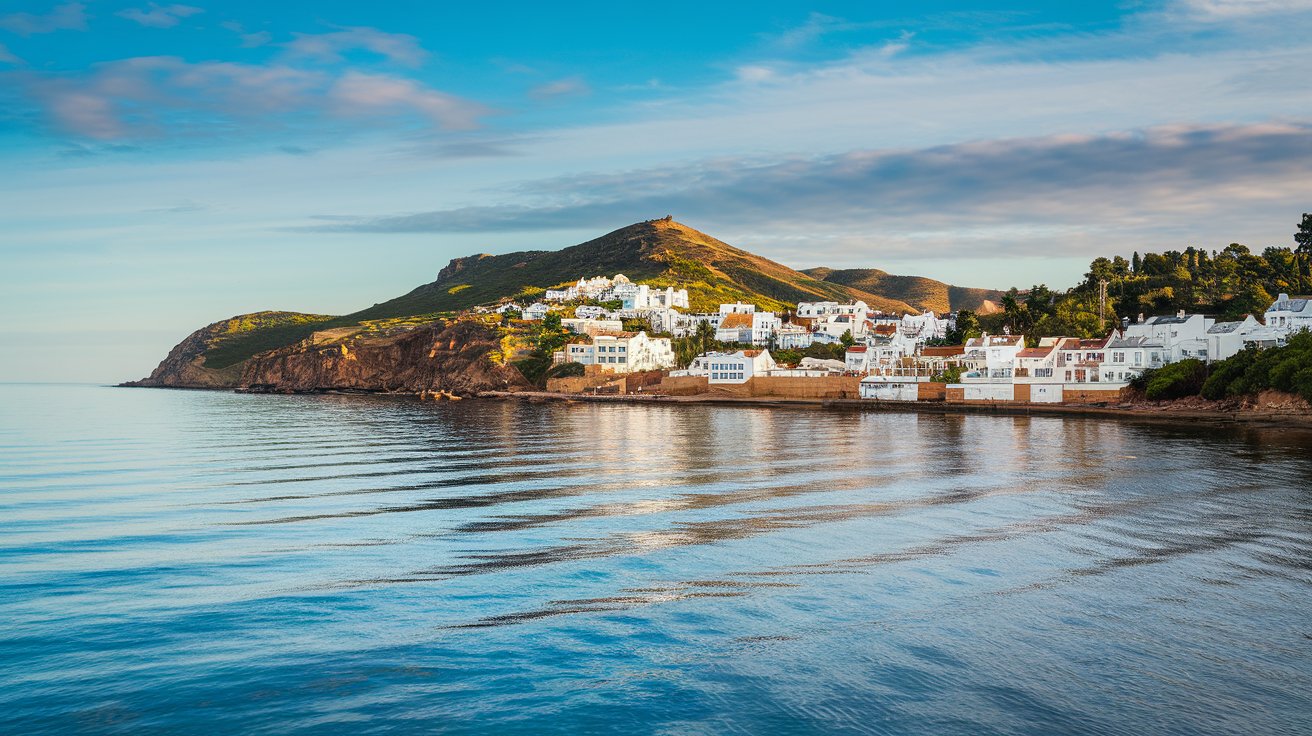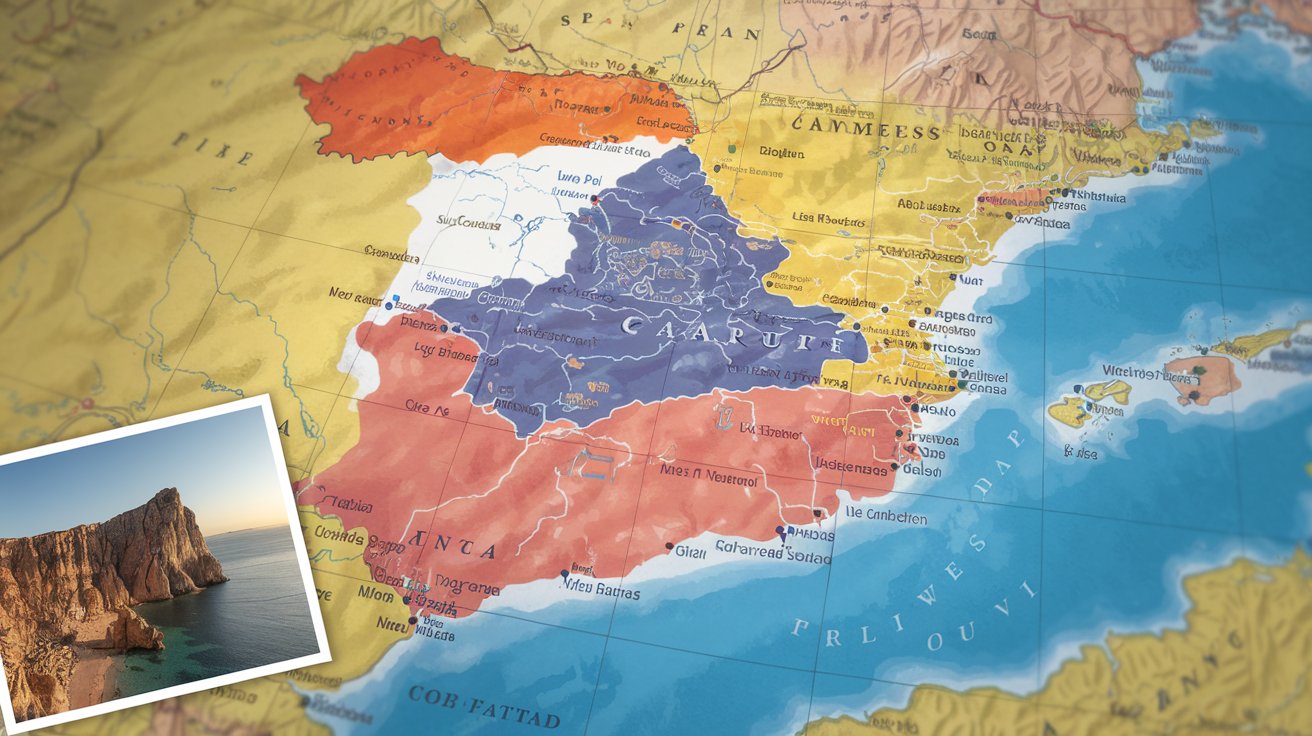
Calpe is located on Spain’s southeastern Mediterranean coast in the Alicante province, part of the renowned Costa Blanca region in the Valencian Community. This picturesque coastal town sits approximately 65 kilometers north of Alicante city and 26 kilometers northeast of Benidorm. Known for its iconic Peñón de Ifach rock formation, Calpe attracts over 2.3 million visitors annually in 2026, making it one of Spain’s most sought-after Mediterranean destinations for American travelers.
Geographic Location of Calpe on Spain’s Costa Blanca
Calpe occupies a strategic position along the Costa Blanca, situated at coordinates 38.6439° N latitude and 0.0428° E longitude. The town covers approximately 23.5 square kilometers and lies between the municipalities of Altea to the southwest and Benissa to the northeast. As of 2026, Calpe has a permanent population of around 32,000 residents, which swells to over 150,000 during peak summer months from June through September.
The Costa Blanca region extends for 200 kilometers along Spain’s Mediterranean coastline, from Dénia in the north to Pilar de la Horadada in the south. Calpe sits roughly in the northern third of this coastal strip, benefiting from the region’s microclimate that delivers over 300 days of sunshine annually. The town’s elevation ranges from sea level at its beaches to 332 meters at the summit of Peñón de Ifach, creating diverse topography within a compact area.
Distances from Calpe to Major Spanish Cities
Understanding distances from Calpe to key destinations helps travelers plan their Costa Blanca itinerary effectively. The town’s central location makes it an excellent base for exploring the broader region while maintaining easy access to transportation hubs and cultural attractions throughout the Valencian Community.
How Far Is Calpe from Benidorm
Calpe is located 26 kilometers (16 miles) northeast of Benidorm, requiring approximately 25-30 minutes by car via the N-332 coastal road or the AP-7 toll motorway. Regular bus services operated by ALSA connect the two towns throughout 2026, with journey times ranging from 35-45 minutes depending on traffic conditions. Unlike Benidorm’s high-rise skyline and vibrant nightlife scene, Calpe maintains a more relaxed, family-oriented atmosphere while offering similar beach quality and Mediterranean climate benefits.
Distance from Calpe to Alicante City
Calpe sits 65 kilometers (40 miles) north of Alicante city, with driving times averaging 50-60 minutes via the AP-7 motorway or 70-80 minutes along the scenic N-332 coastal route. This proximity to Alicante provides Calpe visitors with access to the provincial capital’s shopping districts, museums, and the historic Santa Bárbara Castle. Direct bus connections run hourly during peak season in 2026, making day trips highly convenient for tourists staying in Calpe.
Nearest Airports to Calpe Spain
Alicante-Elche Airport (ALC) serves as Calpe’s primary gateway, located 75 kilometers south with transfer times of approximately 60-75 minutes by car or shuttle service. As Spain’s sixth-busiest airport, Alicante-Elche handled 16.2 million passengers in 2025 and projects 17.8 million for 2026, offering direct flights from major U.S. hubs including New York JFK, Miami, and Chicago O’Hare through carriers like United, Iberia, and American Airlines.
Valencia Airport (VLC) provides an alternative option situated 120 kilometers north of Calpe, with journey times ranging from 90-110 minutes depending on traffic and route selection. Valencia Airport serves 8.9 million annual passengers in 2026 and offers competitive seasonal connections from the United States, particularly during summer months. Some travelers prefer Valencia for lower airfares or when combining coastal visits with exploration of Valencia’s futuristic City of Arts and Sciences.
A smaller regional option, Murcia-Corvera Airport (RMU) lies 170 kilometers south of Calpe with approximately two-hour transfer times. While primarily serving European budget carriers rather than transatlantic flights, this airport benefits American travelers connecting through major European hubs like London, Frankfurt, or Madrid before continuing to the Costa Blanca region.
What Is Calpe, Spain Known For
The Peñón de Ifach rock formation defines Calpe’s identity, rising 332 meters from the Mediterranean Sea as one of Europe’s smallest nature reserves at just 0.53 square kilometers. This dramatic limestone outcrop attracts 85,000 hikers annually in 2026 who traverse the challenging trail to its summit for panoramic views extending to Ibiza on clear days. The rock serves as a natural divider between Calpe’s two main beaches and represents the town’s most photographed landmark.
Calpe boasts exceptional beaches including Playa de la Fossa (Levante Beach), stretching 1 kilometer with fine golden sand and Blue Flag certification maintained continuously since 1987. The town’s fishing heritage remains visible at the daily fish auction, where local boats unload catches of red prawns, octopus, and Mediterranean species that supply Calpe’s renowned seafood restaurants. Archaeological sites including Roman fish salting factories and Moorish defensive towers provide historical depth to this primarily resort-focused destination.
Understanding Calpe’s Position Within the Costa Blanca Region
The Costa Blanca divides into northern and southern sectors, with Calpe positioned in the northern zone characterized by dramatic mountain-meets-sea topography. This northern Costa Blanca geography creates the region’s most photographed coastal scenery, where the Serra Bèrnia and Serra de Oltà mountain ranges descend abruptly to Mediterranean waters. In contrast, the southern Costa Blanca features gentler, sandier coastlines extending toward Torrevieja and the Murcia border.
Calpe’s location provides access to charming inland villages within 30 minutes’ drive, including Guadalest with its mountain-top castle perched above a turquoise reservoir, and Altea with whitewashed houses and blue-domed church creating a distinctly Mediterranean aesthetic. The town serves as kilometer zero for exploring 15 different beaches and coves within a 20-kilometer radius, from the pebble beaches of Benissa to the wide sandy expanses of Albir and Altea.
Is Calpe Good for a Holiday
Calpe excels as a holiday destination for families and active travelers seeking Mediterranean beach experiences without overwhelming commercialization. The town maintains a balanced tourism model in 2026, offering modern amenities including 47 hotels, 120+ restaurants, and comprehensive water sports facilities while preserving authentic Spanish character in its old town district. Average visitor satisfaction ratings reach 4.3 out of 5 stars across major travel platforms, with particular praise for beach quality, safety, and value compared to more expensive Costa Blanca destinations like Altea or Jávea.
American visitors appreciate Calpe’s walkability and English-language services, with approximately 18% of permanent residents originating from UK, Germany, and other Northern European countries creating a multilingual service environment. The town’s compact 23.5-square-kilometer area allows tourists to navigate easily without rental cars, though vehicle hire enhances access to regional attractions. Climate advantages include average summer temperatures of 28-32°C (82-90°F) and mild winters rarely dropping below 12°C (54°F), enabling year-round tourism with peak season extending from May through October in 2026.
Is Calpe Like Benidorm
Calpe differs significantly from Benidorm in scale, atmosphere, and tourism style despite their geographical proximity of just 26 kilometers. While Benidorm’s skyline features over 300 high-rise buildings and accommodates 400,000 visitors simultaneously during peak season, Calpe maintains height restrictions preserving views of Peñón de Ifach and limiting development to medium-rise structures. This regulatory difference creates Calpe’s more relaxed, less congested environment preferred by families and mature travelers.
Benidorm’s 24-hour entertainment scene contrasts with Calpe’s quieter nightlife, where restaurants and beach bars close earlier and nightclub options remain limited. However, Calpe offers comparable beach quality with less crowding—its main beaches accommodate approximately 25,000 visitors daily in peak season compared to Benidorm’s 80,000+ beach users. Both towns share similar climate advantages, water temperatures, and access to regional attractions, making the choice dependent on preferred vacation intensity rather than natural advantages.
Is Calpe Expensive Compared to Other Costa Blanca Destinations
Calpe’s cost structure positions it mid-range among Costa Blanca resort towns, with 2026 pricing approximately 15-20% below exclusive destinations like Jávea or Altea but 25-30% above budget options such as Torrevieja or Santa Pola. Average three-star hotel rates range from €85-€140 per night during peak season, while vacation apartment rentals average €700-€1,200 weekly for properties sleeping four to six guests. Restaurant meals cost €12-€25 per person for three courses excluding drinks at mid-range establishments, with fresh seafood commanding premium pricing.
American visitors benefit from favorable dollar-euro exchange rates throughout 2026, with the currency pair fluctuating between 1.08-1.12 dollars per euro depending on seasonal monetary policy adjustments. Grocery shopping at local supermarkets like Mercadona or Consum costs 30-40% less than restaurant dining, enabling budget-conscious travelers to reduce expenses significantly. Beach access remains free throughout Calpe’s coastline, while sunbed and umbrella rentals cost €15-€20 daily at equipped beach sections during summer months.
Transportation Options and Getting to Calpe
Multiple transportation modes connect Calpe to regional hubs, providing flexibility for American travelers arriving via Alicante or Valencia airports. Private transfer services operate 24/7 from Alicante-Elche Airport with fixed rates of €75-€95 for up to four passengers, offering door-to-door convenience without navigating public transport with luggage. These services reduce transfer times to 60 minutes compared to 90-120 minutes via bus connections requiring changes.
ALSA bus company operates regular services linking Calpe with Alicante, Benidorm, Altea, and Valencia throughout 2026, with frequencies increasing from hourly to half-hourly during peak summer months. Single tickets from Alicante Airport to Calpe cost €11.50, representing significant savings versus private transfers though requiring 90-110 minutes including intermediate stops. Rental cars from Alicante Airport start at €25 daily for economy vehicles, providing maximum flexibility for exploring the broader Costa Blanca region during multi-day stays.
Best Time to Visit Calpe for American Travelers
Optimal visiting periods balance weather, crowds, and pricing considerations, with May-June and September-October offering ideal conditions in 2026. These shoulder months deliver average temperatures of 24-28°C (75-82°F), Mediterranean water temperatures of 21-24°C (70-75°F), and hotel rates 30-45% below peak July-August pricing. Beach occupancy remains comfortable with sufficient space for towels and umbrellas, while restaurants accommodate walk-in diners without lengthy waits common during high season.
Summer months from July through August guarantee optimal beach weather but bring maximum crowds, highest accommodation costs, and temperatures occasionally exceeding 35°C (95°F) during heat waves. American Independence Day week coincides with early summer season, offering flight availability before European school holidays commence mid-July. Winter visits from November through March appeal to retirees and remote workers seeking mild 15-18°C (59-64°F) temperatures and dramatically reduced rates, though swimming becomes uncomfortable and many seasonal restaurants close until Easter.
Navigating Calpe: Street Maps and Town Layout
Calpe’s town layout divides into distinct zones radiating from the central Peñón de Ifach landmark. The old town (Casco Antiguo) occupies elevated terrain inland from the beaches, featuring narrow streets, traditional tapas bars, and the historic Plaza de la Villa with its Gothic-Mudejar church. Modern development extends northward along Playa de la Fossa and southward toward Puerto Blanco marina, where international restaurants and shopping centers concentrate.
Digital mapping applications including Google Maps function reliably throughout Calpe in 2026, with comprehensive street coverage and real-time navigation supporting both driving and pedestrian routes. The Calpe Tourism Office at Avenida dels Exercits Espanyols 44 provides free printed maps showing beaches, attractions, parking areas, and bus stops, proving valuable for visitors preferring physical references. Major streets including Avenida Gabriel Miró and Avenida de los Ejércitos Españoles form the town’s arterial network, connecting beach zones with commercial districts and residential areas.
What to Expect During Your Calpe Holiday Experience
Daily routines in Calpe revolve around beach time and Mediterranean dining rhythms, with most visitors establishing patterns of morning beach visits from 9:00-13:00, afternoon siestas escaping peak heat, and evening paseos along the seafront promenades. The town’s compact dimensions enable walking between accommodation, beaches, restaurants, and supermarkets within 15-20 minutes maximum, reducing transportation needs once settled. Beach facilities include showers, changing rooms, lifeguard services, and accessible wooden walkways accommodating wheelchairs and strollers.
Cultural activities supplement beach-focused holidays through weekly markets selling local produce, crafts, and clothing every Saturday in the old town area. The Fish Market (Lonja) opens for public viewing Monday through Friday at 17:00 when the daily catch auction occurs, providing insight into Calpe’s continuing fishing industry. Evening entertainment remains low-key compared to Benidorm, centering on waterfront dining, gelato while strolling the promenade, and occasional live music at beach bars during summer months.
Related video about where is calpe in spain
This video complements the article information with a practical visual demonstration.
FAQ – Common Questions
How far is Calpe from Alicante Airport and what are the best transfer options?
Calpe is located 75 kilometers from Alicante-Elche Airport with transfer times of 60-75 minutes by car. Private transfers cost €75-€95 for up to four passengers and provide door-to-door service, while ALSA bus services offer economical alternatives at €11.50 per person requiring 90-110 minutes with intermediate stops. Rental cars start at €25 daily, providing maximum flexibility for exploring the Costa Blanca region during your stay in 2026.
Is Calpe more expensive than other Costa Blanca beach towns?
Calpe’s pricing positions mid-range among Costa Blanca destinations, approximately 15-20% cheaper than exclusive towns like Jávea or Altea but 25-30% more expensive than budget options like Torrevieja. Three-star hotels average €85-€140 nightly during peak season, restaurant meals cost €12-€25 per person, and vacation apartments rent for €700-€1,200 weekly. Overall costs remain reasonable for American travelers benefiting from favorable 2026 exchange rates of 1.08-1.12 dollars per euro.
What makes Calpe different from Benidorm for tourists?
Calpe offers a quieter, more relaxed atmosphere compared to Benidorm’s high-rise skyline and 24-hour entertainment scene. While both towns share similar climate and beach quality, Calpe maintains height restrictions preserving natural views and accommodates fewer visitors—25,000 daily beach users versus Benidorm’s 80,000+. Calpe appeals primarily to families and mature travelers seeking authentic Spanish character with modern amenities, while Benidorm attracts party-oriented visitors and those preferring intensive entertainment options.
When is the best time for Americans to visit Calpe in 2026?
May-June and September-October represent optimal visiting periods for American travelers in 2026, offering temperatures of 24-28°C (75-82°F), comfortable water temperatures of 21-24°C, and hotel rates 30-45% below peak summer pricing. These shoulder months provide pleasant beach conditions without July-August crowds and heat. July-August guarantees best weather but brings maximum tourists and highest costs, while November-March suits budget-conscious visitors accepting cooler 15-18°C temperatures and limited swimming conditions.
What is Calpe most famous for among Spanish coastal destinations?
Calpe is internationally recognized for the Peñón de Ifach, a dramatic 332-meter limestone rock rising from the Mediterranean that attracts 85,000 hikers annually. This natural monument creates one of Europe’s smallest nature reserves and serves as Calpe’s defining landmark visible throughout the town. Beyond the rock, Calpe maintains fame for Blue Flag beaches, particularly the 1-kilometer Playa de la Fossa, daily fish auctions showcasing Mediterranean seafood, and well-preserved archaeological sites including Roman fish-salting factories dating to the 1st century.
Can you easily visit other Costa Blanca towns from Calpe?
Calpe’s central Costa Blanca location enables easy day trips to numerous destinations within 30-60 minutes’ drive. Benidorm sits 26 kilometers away (25-30 minutes), Altea 12 kilometers (15 minutes), Alicante city 65 kilometers (50-60 minutes), and Valencia 120 kilometers (90-110 minutes). Regular ALSA bus services connect these towns hourly during peak season, while rental cars provide maximum flexibility. The compact regional geography allows visitors to experience diverse Costa Blanca attractions—mountain villages, alternative beaches, shopping centers, and cultural sites—while maintaining Calpe as a peaceful accommodation base.
| Location Aspect | Details | Travel Benefit |
|---|---|---|
| Geographic Position | Northern Costa Blanca, Alicante province, 65km north of Alicante city | Central access to regional attractions with 300+ sunshine days annually |
| Nearest Airport | Alicante-Elche Airport (75km, 60-75 minutes transfer) | Direct U.S. flights and multiple daily transfer options |
| Distance to Benidorm | 26 kilometers northeast (25-30 minutes by car) | Access to entertainment while maintaining peaceful base |
| Main Attraction | Peñón de Ifach (332m rock formation and nature reserve) | Iconic landmark with hiking trails and panoramic Mediterranean views |
| Cost Level | Mid-range: €85-€140 nightly hotels, €12-€25 restaurant meals | Balanced value between budget and luxury Costa Blanca destinations |
| Best Visiting Months | May-June and September-October for optimal conditions | Pleasant 24-28°C weather with 30-45% lower rates than peak season |